
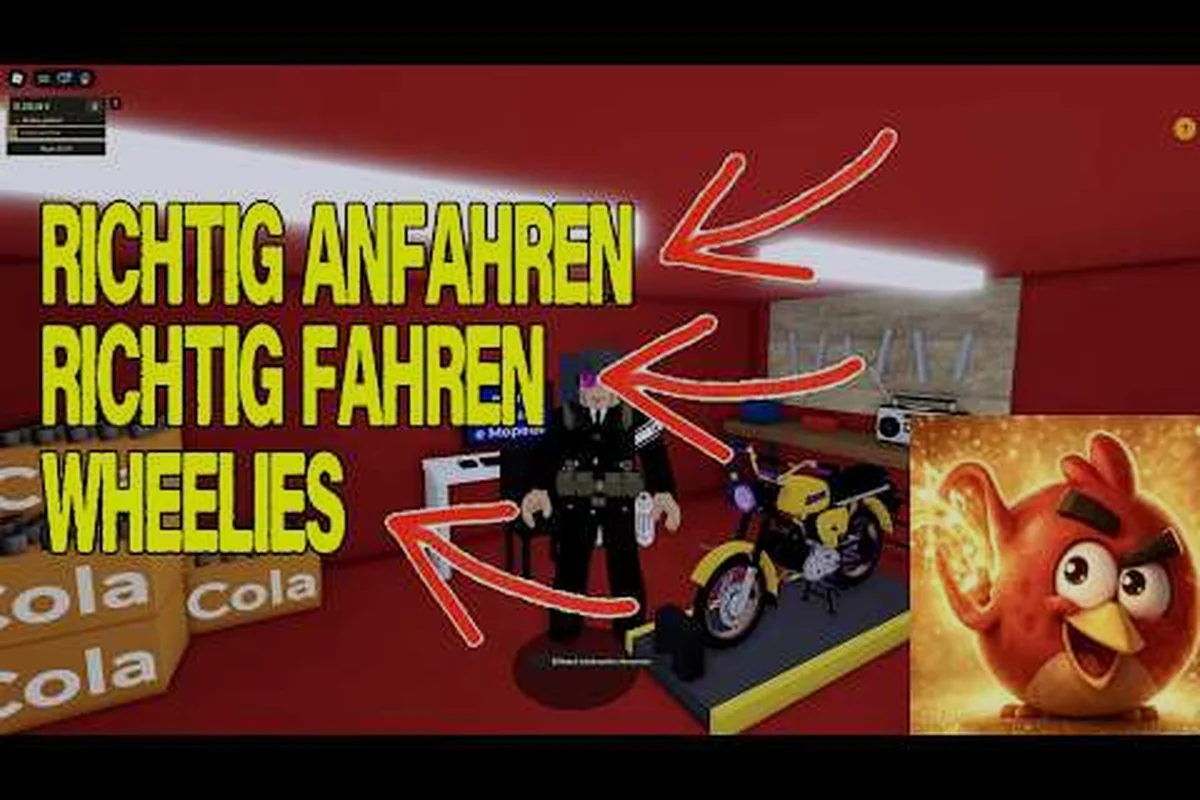
Riding well in German Moped Days comes down to three habits: a clean kick-start, the right fuel blend, and smooth throttle control. This German Moped Days riding guide breaks down each one so your countryside cruises feel natural instead of twitchy.
What Makes the Ride Feel Different
German Moped Days is not an arcade racer. Servers hold up to 20 players, and the pace stays deliberately slow, which is why the community treats it as a chill game rather than a competition. That relaxed framing changes how you should approach the controls: jerky inputs read as mistakes here, not aggression.
The core ritual loop is simple but strict. Every ride starts with a manual kick-start on a two-stroke engine, then a proper fuel blend, and only after that do you cruise the open German countryside. Skip a step and the moped will not cooperate, no matter how hard you mash the throttle.
A German-language tutorial by BlockmasterMoped walks through exactly this sequence, covering throttle, balance, and the control habits that make cruising feel natural. You can watch that Fahr-tutorial and wheelie tutorial video to see the timing in motion before you try it yourself.
Here is what separates a smooth ride from a frustrating one: the kick-start demands one clean, committed press rather than spammed inputs, since the two-stroke engine only catches on a well-timed stroke. From there, your fuel blend ratio decides whether the engine fires at all, and throttle feathering keeps the rear wheel planted instead of spinning out on the countryside roads. Get the balance point right and wheelies plus slow turns stop feeling twitchy — with only 20 players per server, that control discipline matters more than raw speed.
-
Kick-start timing — a single clean press beats repeated spam
-
Fuel blend ratio — the mix gates whether the engine catches at all
-
Throttle feathering — gradual input keeps the rear wheel planted
-
Balance point — the sweet spot for wheelies and slow turns
-
Server pace — small lobbies mean fewer collisions and calmer traffic
If you are still learning the basics of getting moving, the first-hour walkthrough covers the opening steps in more detail — it breaks the kick-start into individual frames so you can see exactly when the two-stroke catches. The reason this matters more than it sounds: a mistimed press floods the engine, and you will then need to wait out a short cooldown before the next attempt, which stalls your whole ritual loop while the rest of the 20-player lobby cruises past. Practicing the clean single press in an empty server first saves you that dead time once you join a busier one.
Kick-Start and Fuel Blend Basics
The two-stroke engine is the heart of every moped in the game, and it does not forgive shortcuts. Before you touch the throttle, you need a successful kick-start and a correct fuel blend. Players report that most early frustration comes from rushing this stage.
Getting the Kick-Start Right
A kick-start is a single deliberate input, not a rapid tap sequence. The engine catches when your timing lines up with the compression stroke, so a steady press works far better than frantic clicking. If the moped sputters and dies, you likely kicked too early or too late rather than too softly.
Mixing the Fuel Blend
The fuel blend is a ratio, and the game expects you to respect it. A lean mix causes weak acceleration and stalling; an over-rich mix floods the engine and forces another kick-start. Community testing suggests that matching the blend to your riding style — lighter for cruising, slightly richer for wheelie practice — keeps the engine responsive.
| Stage | Action | Common Mistake | Result |
|---|---|---|---|
| 1. Pre-ride | Check fuel blend ratio | Skipping the mix entirely | Engine will not catch |
| 2. Kick-start | One clean, steady press | Spamming the kick input | Flooded engine, restart |
| 3. Warm-up | Let idle settle briefly | Immediate full throttle | Stalling on launch |
| 4. Launch | Feather throttle gradually | Snapping throttle open | Rear wheel spin, wobble |
Once the engine idles cleanly, you are ready to ride. The four-stage sequence above — pre-ride mix check, single steady kick, brief warm-up idle, and feathered launch — maps directly onto the table rows, so treat each column as a checkpoint rather than a suggestion. The engine start breakdown expands on each of these four stages if you want the full sequence.
Throttle Control and Cruising Technique
Cruising is the main activity in German Moped Days, and it rewards patience over speed. The countryside roads are wide and mostly empty, so the challenge is not avoiding traffic — it is keeping your line steady while the two-stroke engine hums underneath you.
Feathering the Throttle
Throttle feathering means applying input in small increments rather than one hard press. A gradual roll-on keeps the rear wheel planted and lets the engine build revs smoothly. Snapping the throttle open does the opposite: the wheel breaks traction, the moped wobbles, and you lose the calm rhythm the game is built around.
Cornering Lines and Speed Management
Because lobbies cap at 20 players, you rarely fight for space. That means you can focus on cornering lines and speed management. Ease off before a bend, hold a steady throttle through it, and roll back on as you exit. This mirrors real moped riding and keeps your momentum consistent.
| Riding Style | Throttle Input | Best For | Risk |
|---|---|---|---|
| Cruise | Gradual roll-on | Countryside touring | Very low |
| Sport | Faster roll-on | Short bursts | Medium wobble |
| Wheelie | Sharp blip then balance | Stunt practice | High flip risk |
| Commute | Steady mid-throttle | Getting to the garage | Low |
A German Moped Days chill game guide approach works best here: treat each ride as a relaxed tour, not a time trial. The complete guide covers the wider progression loop if you want to see how cruising fits into the bigger picture.
How to Pull Off Balanced Wheelies
Wheelies are the flashiest skill in the game, and they are also the easiest way to embarrass yourself if you rush them. The trick is not raw throttle — it is finding and holding the balance point, the sweet spot where your moped's center of mass sits directly over the rear wheel and forward momentum cancels out gravity. On flat roads, that window opens around 40–50 km/h; tap the brake or ease the throttle the instant the front wheel climbs past horizontal, because over-rotating past roughly 60 degrees drops you on your tail and costs precious seconds.
Finding the Balance Point
The balance point is the angle where the front wheel lifts and the moped stops wanting to flip backward. You reach it with a short throttle blip, then hold it with tiny corrections. Overshoot and you flip; undershoot and the wheel drops back down. Practice on flat, empty stretches before you try it near other riders.
Holding the Wheelie
Once you are at the balance point, your job is micro-adjustment. Small throttle taps and slight lean changes keep the moped steady. Players who try to hold a wheelie with constant full throttle usually flip within a second or two, because the engine keeps adding rotation you cannot counter.
| Wheelie Phase | Input | Duration | Goal |
|---|---|---|---|
| Initiation | Short throttle blip | Under 1 second | Lift front wheel |
| Balance | Micro throttle taps | 2-5 seconds | Hold angle steady |
| Correction | Slight lean adjust | Continuous | Prevent flip |
| Exit | Ease throttle off | 1 second | Land front wheel |
If you want to see the timing frame by frame, the wheelie tutorial video by BlockmasterMoped demonstrates the blip-and-hold rhythm better than text can. Watch how the rider's throttle input in the clip maps onto the Balance row of the table above: each micro tap lasts roughly a quarter-second, then releases, letting the moped's rear suspension settle before the next input. That pause is the part text tends to undersell — holding the tap even half a second too long stacks rotation, and once the front wheel passes the balance point the flip is unrecoverable. Pause the video on each blip and compare the front-wheel height against your own run; matching that visual reference is faster than guessing by feel.
Rookie Mistakes Most New Riders Repeat
Most new riders hit the same handful of problems in their first sessions, and they almost always trace back to one root cause: treating a chill game like a race. The table below breaks down the five most common mistakes — kick-start spamming, skipping the fuel blend, snapping the throttle, chasing top speed, and popping wheelies before you can even cruise straight — along with why each happens and the one-line fix that resolves it. Knowing them ahead of time saves you a lot of restarts, and it keeps your 20-player lobby from turning into a pileup on the first countryside stretch.
| Mistake | Why It Happens | Fix |
|---|---|---|
| Spamming kick-start | Impatience | One steady press |
| Ignoring fuel blend | Skipping setup | Mix before every ride |
| Snapping throttle | Arcade habits | Feather the input |
| Chasing speed | Racing mindset | Cruise at a calm pace |
| Wheelie too early | Skipping basics | Master cruising first |
The biggest trap is treating German Moped Days like a racing game. It is not. The small 20-player lobbies and slow countryside pace are designed for relaxed riding, and fighting that design makes everything harder. Reports from players consistently show that the people who enjoy it most are the ones who slow down.
Feedback in this game is collected through the phone or garage computer, and the developer ships quick "(UPDATE! + fix!)" patches during the beta. If a control feels off, that channel is worth using — the feedback walkthrough explains how to submit it properly.
Practical Riding Tips That Stick
Beyond the core mechanics, a few habits separate riders who improve quickly from those who plateau. The biggest divider is throttle discipline: blipping a two-stroke before the clutch fully engages wastes RPM and stalls the wheelie, while a steady roll-on keeps the front wheel lifting smoothly. Riders who log short, focused sessions on flat stretches of the German countryside map progress faster than those grinding long rides on hilly terrain, where gradient changes constantly interrupt stunt timing. Tracking your fuel and upgrade spend after each session also reveals which mopeds are actually earning their garage slot.
-
Practice on empty roads first — flat, quiet stretches are ideal for wheelie drills
-
Warm up the engine before stunts — a cold two-stroke stalls mid-blip
-
Keep your garage organized — a tidy setup speeds up every session
-
Watch your fuel level — running dry mid-ride forces a full restart
-
Ride with the lobby, not against it — small servers reward patience
Garage management matters more than it looks. Every moped you own occupies a fixed slot, and once your collection outgrows the default capacity, you cannot simply buy a new ride without clearing space first — an unmanaged garage quietly blocks the next upgrade you were saving for. The garage upgrade guide breaks down how additional slots are priced, how storage capacity scales with each tier, and why keeping spare mopeds parked rather than sold preserves their tuned stats for later stunt sessions.
Frequently Asked Questions
How do I start the moped in German Moped Days?
You perform a single clean kick-start on the two-stroke engine, then confirm your fuel blend is correct before touching the throttle. Spamming the kick input floods the engine and forces a restart, so one steady press is the reliable approach every time.
Why does my moped keep stalling?
Stalling usually traces back to a lean or over-rich fuel blend, or to opening the throttle immediately after the kick-start. Let the engine idle briefly, then roll the throttle on gradually. Players report that fixing the blend alone resolves most stalling.
What is the easiest way to learn wheelies?
Start with short throttle blips on flat, empty roads and focus on finding the balance point rather than holding full throttle. Once you can hold the angle for two or three seconds, extend it with micro-adjustments. Rushing the blip causes flips.
Is German Moped Days a racing game?
No. It is built as a chill riding experience with servers capped at 20 players and a slow countryside pace. Treating it like a racer leads to wobbles and frustration, while a relaxed cruising approach matches how the game is actually designed to be played.
How many players fit in one server?
The 20-player server cap is the single biggest reason German Moped Days feels like a chill game guide example rather than a Roblox racer. With only 20 slots, the countryside map never clogs at chokepoints like village intersections or narrow bridge crossings, so you can hold a steady cruising line without braking for traffic. Fewer riders also means the two-stroke engine audio stays readable, making it easier to hear your own moped and time kick-starts and throttle blips.
Riding well in German Moped Days is less about speed and more about rhythm. Nail the kick-start, respect the fuel blend, feather your throttle, and practice wheelies only after cruising feels automatic. Do those four things and the countryside opens up exactly the way the game intends.