
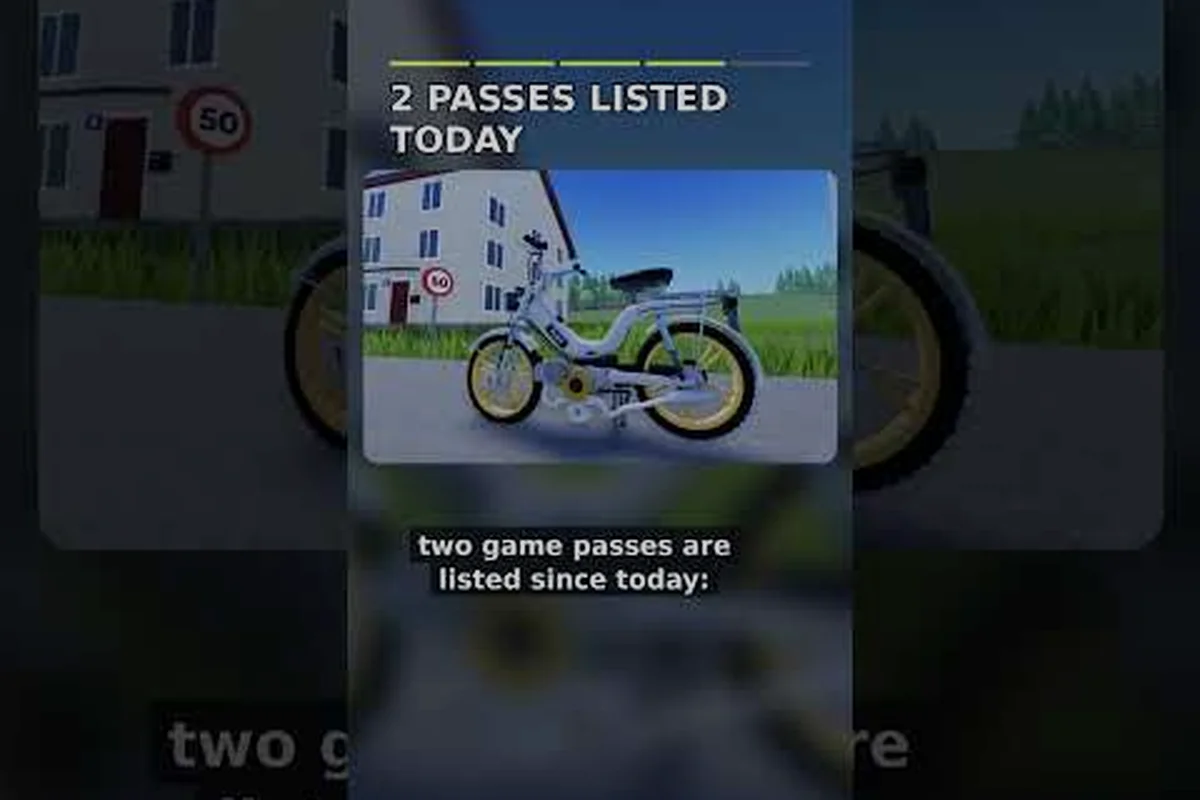
Getting the mix right is the difference between a moped that purrs and one that seizes on the open road. This german moped days fuel ratio guide explains the exact oil-to-gasoline blend, plus how buying fuel cheap at night stretches every euro further.
The game is a relaxed Roblox beta where you kick-start a classic two-stroke engine, blend your own fuel, and cruise a German map. Fuel is a core survival mechanic, so a wrong ratio costs you repairs and wasted cash. Get the blend and the timing right, and your rides stay smooth while your wallet stays full.
According to the German Moped Days Roblox experience, the fuel-to-oil ratio mechanics are handled directly within the game's moped maintenance system, so players should verify current ratios there rather than relying on static guides.
Understanding the Two-Stroke Fuel Ratio in German Moped Days
A two-stroke engine burns oil and gasoline together, which means the ratio you mix directly controls how the engine behaves. In German Moped Days, the official game page describes blending your own two-stroke fuel as a core part of the loop, and community testing has settled on a practical working range that keeps most stock mopeds running cleanly.
The standard benchmark players use is 1:50, meaning one part two-stroke oil to fifty parts gasoline. That is the lean-but-safe middle ground for a stock engine. Go too lean and the piston runs hot; go too rich and you foul the plug and lose power. The table below shows how the common ratios behave in practice.
| Mix Ratio | Oil per 1L Gas | Engine Behavior | Best For |
|---|---|---|---|
| 1:40 | 25 ml | Rich, smoky, cooler running | Older or worn engines |
| 1:50 | 20 ml | Balanced, clean burn | Stock mopeds, daily riding |
| 1:60 | 16.7 ml | Lean, hotter, more power | Light cruising only |
| 1:33 | 30 ml | Very rich, heavy smoke | Break-in periods |
The 1:50 blend is the safest default for almost every stock moped in the game, and it is the number most players memorize first. If you are still deciding which bike to ride, the best starter moped breakdown explains which models tolerate a slightly richer mix without fouling.
Why the Ratio Matters More Than the Fuel Brand
The game does not model premium fuel grades the way a racing sim would. What it does model is combustion health — a hidden value that drops when your mix is wrong and recovers when you refuel correctly. Players report that running a consistently rich mix slowly clogs the engine, while a consistently lean mix raises heat and risks a seizure event mid-ride.
Because the penalty is gradual rather than instant, many new riders ignore the ratio until something breaks. That is the trap. A moped that feels fine for ten minutes can still be accumulating wear, and the repair bill arrives all at once. Treating the ratio as a fixed habit rather than an occasional fix keeps you ahead of that curve.
Reading the Signs of a Bad Mix
You do not need a diagnostic menu to tell when your blend is off — German Moped Days hands you the answer through exhaust color, engine note, and throttle response, the same cues a real two-stroke tuner reads on a test stand. The trick is knowing the baseline: a correctly mixed 1:50 batch (roughly 20 ml of two-stroke oil per liter of gasoline) should pull cleanly from idle to top speed with a light grey haze and a steady, even exhaust tone. Any deviation from that baseline — thicker smoke, a sharper crackle, or a hesitation that wasn't there on your last fill — is the game flagging that your oil-to-gasoline ratio has drifted outside the safe band before real damage sets in.
-
Heavy white smoke on acceleration usually means the mix is too rich.
-
A raspy, hot exhaust note points to a lean mix that needs more oil.
-
Sluggish pickup after a refuel often signals a fouled spark plug from over-oiling.
-
Sudden power loss mid-ride is the classic warning sign of an approaching seizure.
Each of these signals maps back to a ratio problem, and correcting the blend early is far cheaper than paying for an engine rebuild later. A fouled plug from over-oiling, for instance, costs you a few minutes and a wire brush, while ignoring that same rich mix until the crankcase loads up with carbon can score the cylinder and turn a routine top-end job into a full teardown. The math is just as lopsided on the lean side: running a 1:50 batch closer to 1:70 to stretch your oil raises combustion temperature, and the few cents saved per liter at the pump vanish the moment a soft seize welds the piston skirt to the bore. Treat every heavy-smoke, raspy-note, or sluggish-pickup reading as a free diagnostic, because on German Moped Days the cheap fix is always the one you make at the mixing jug rather than the workbench.
How to Mix Oil and Gasoline Correctly
Mixing is a two-step process: measure the oil, then combine it with the gasoline in the right order. The german moped days mix ratio oil gasoline workflow rewards patience, because eyeballing the pour is the single most common mistake new riders make.
The sequence matters because the game tracks oil and gasoline as separate inventory items until they combine in the tank, so pouring gasoline into a jug that already holds oil can leave unmixed residue clinging to the container walls. Start by filling the gasoline to your target volume first — this gives you a fixed number to calculate against, whether you're running a 1:50 ratio for a stock 50cc cylinder or richening to 1:40 after a big-bore kit swap. Only then measure the oil with the in-game measuring tool and add it into the gasoline, never the reverse.
-
Fill the gasoline first to roughly the target volume so you know how much oil to add.
-
Measure the oil precisely using the in-game measuring tool rather than a rough pour.
-
Add the oil to the gasoline, not the other way around, so it disperses evenly.
-
Agitate the tank by riding gently for the first minute to blend the mixture.
-
Check the exhaust note after a short ride to confirm the blend is behaving.
Skipping the measuring step is where most riders go wrong. In German Moped Days, a pour that merely looks "about right" can easily land at 1:35 or 1:65, and both extremes punish you differently: a 1:35 mix fouls the spark plug with carbon within a few in-game kilometers, while 1:65 starves the cylinder of lubrication and risks a seized piston on the next hill climb. Because the measuring tool reads out an exact oil volume, use it every fill instead of trusting the jug's visual line — precision here saves you a repair trip and the parts cost that comes with it.
A Quick Reference for Common Tank Sizes
Tank capacity is the variable that trips up most riders, because the 1:50 standard is a ratio, not a fixed volume — a 3 L tank needs only 60 ml of two-stroke oil, while a 10 L tank swallows 200 ml at the same mix. Get the arithmetic wrong on a small tank and you run lean; overshoot on a large one and you foul the plug before the first checkpoint. The table below converts the 1:50 standard into oil amounts for the tank sizes players encounter most often.
| Tank Size | Oil at 1:50 | Oil at 1:40 | Oil at 1:60 |
|---|---|---|---|
| 3 L | 60 ml | 75 ml | 50 ml |
| 5 L | 100 ml | 125 ml | 83 ml |
| 8 L | 160 ml | 200 ml | 133 ml |
| 10 L | 200 ml | 250 ml | 167 ml |
Keeping this table handy means you never have to do mental math at the pump. If you want a deeper walkthrough of the mixing station itself, the full fuel mixing guide covers the tools and timing in more detail.
Common Mixing Mistakes to Avoid
Consistency errors compound in ways one-off mistakes never do, because a moped's two-stroke engine has no way to correct an off-ratio mix once it's in the tank. Run 1:40 instead of the spec 1:50 across a full German Moped Days session and you're pushing roughly 25% extra oil through the combustion chamber — enough to foul the plug, cake the exhaust port, and drop top speed before the ride even ends. The real trap is that these slips rarely announce themselves immediately; the engine idles fine at the depot, then bogs under load halfway through a night route. That delayed feedback is exactly why the four habits below are worth auditing every single fill-up rather than trusting feel.
-
Pouring oil first into an empty tank, which makes it cling to the walls instead of blending.
-
Reusing old mixed fuel that has been sitting, since separation reduces its effectiveness.
-
Topping off with straight gasoline and forgetting the oil entirely.
-
Switching ratios mid-tank without draining, which creates an unpredictable blend.
Each of these errors is easy to fix once you recognize the pattern, and avoiding them keeps your engine health stable over long sessions. Take the "oil first" habit: pouring 100 ml of two-stroke oil into a dry 5-liter tank leaves a film clinging to the walls that never fully blends, so the first kilometer runs lean while the last runs rich — a swing that shows up as a soft seize risk on a cold German Moped Days start. Reusing old mixed fuel is the sleeper error, because pre-mix begins separating after roughly two to four weeks, and the ethanol in modern pump gas accelerates that breakdown; if you stock up during the cheaper night fuel window, date each jerrycan and shake it before every pour. Topping off with straight gasoline dilutes a 1:50 tank toward 1:70 or worse, leaning the mixture exactly when the engine is hottest. Switching ratios mid-tank without draining is the worst offender, since you cannot predict the resulting blend — always run the tank near empty, then refill at the correct spec. Auditing these four habits at every fill-up, especially when buying fuel cheap at night, is what separates a reliable season from a rebuild.
When Fuel Gets Cheap at Night
Fuel prices in German Moped Days are not static. Community reports consistently note that fuel becomes cheaper during the night cycle, which turns timing into a genuine money-saving tool. Understanding the german moped days fuel cheap at night pattern lets you plan refuels around the discount instead of paying full price whenever your tank runs dry.
The night window is the key. During daylight hours, stations charge the standard rate, but once the map shifts to night, the price per liter drops noticeably. Players who refuel on a schedule rather than on impulse routinely spend less across a full session. The comparison below shows the difference in practice.
| Time of Day | Relative Price | Best Action |
|---|---|---|
| Morning | Standard rate | Buy only what you need |
| Afternoon | Standard rate | Avoid large refuels |
| Night | Discounted rate | Fill the tank completely |
| Late night | Discounted rate | Stock up for the next day |
The strategic takeaway is simple: never fill a full tank during the day if you can wait for night. A partial refuel in the afternoon keeps you moving until the discount window opens, and then you top off at the lower price.
Planning a Night Refuel Run
A night refuel run is a short trip you schedule around the discount rather than a spontaneous stop. The goal is to arrive at the station with a nearly empty tank so you can take maximum advantage of the cheaper rate.
-
Track your fuel level during the afternoon so you know how far you can push before night.
-
Plan your route to end near a station as the day cycle closes.
-
Fill completely once the night price kicks in, since partial fills waste the discount.
-
Note the price so you can confirm the discount is active before committing.
Riders who build this into their routine treat fuel as a planned expense rather than a random one, and the savings compound over many sessions. On a typical German moped with a 50cc engine and a 1:50 mix ratio, a full tank holds roughly 5 liters, so filling at the night discount instead of peak daytime rates can save a meaningful percentage per fill. Over a month of daily commuting, that gap adds up to enough extra fuel for several additional rides, effectively stretching your oil-and-gasoline budget without changing your mix ratio or riding habits.
Why the Night Discount Exists
The cheaper nighttime fuel is not a bug — it is a deliberate design choice that rewards players who pay attention to the game's day-night rhythm. The official game page confirms the experience runs on an open German map with a live cycle, and fuel pricing shifts with it.
This design encourages a slower, more thoughtful playstyle. Instead of grinding for cash to cover constant refuels, you learn to work with the world's schedule. That fits the relaxed tone of the game, where cruising matters more than racing. Understanding the german moped days night fuel discount means you stop fighting the economy and start using it.
Timing Your Purchases for the Best Fuel Price
Knowing that night is cheaper is only half the battle. The other half is knowing exactly when to buy so you never overpay, which is where the german moped days best time to buy fuel question becomes practical rather than theoretical.
The best time is the moment the night cycle begins, before you have burned through your reserve. Waiting until you are stranded forces an emergency daytime purchase at full price. The table below maps common situations to the right buying decision.
| Your Situation | Recommended Timing | Reason |
|---|---|---|
| Tank above half | Wait for night | No urgency, maximize discount |
| Tank near empty at night | Buy immediately | Discount is active now |
| Tank near empty in daytime | Buy minimum | Avoid full-price fill |
| Planning a long ride | Pre-buy at night | Cover the whole trip cheaply |
The pattern is consistent: buy big at night, buy small by day. That single rule captures most of the savings available, and it requires no special tools or upgrades to follow. In practice, a rider who tops off a full tank during the night fuel discount pays the reduced rate on every liter, while the same rider forced into a daytime emergency fill pays full price for maybe two liters just to reach the next night cycle. Over a month of commuting, that gap compounds: full night fills versus repeated small daytime top-ups can differ by a meaningful margin in total fuel spend, and none of it depends on your mix ratio or jetting. The only discipline required is watching your reserve and timing the fill before it runs dry.
Combining Cheap Fuel With Fuel-Saving Habits
Cheap fuel goes further when you also ride efficiently. The fuel saving strategies guide covers habits like smooth acceleration and route planning that reduce how often you need to refuel at all. Pairing those habits with night buying creates a compounding effect on your budget.
Efficient riding lowers your consumption rate, and night buying lowers your price per liter. Together they shrink your total fuel spend far more than either one alone. Riders who adopt both report that fuel stops become a minor expense instead of a constant drain.
Budgeting Fuel Across a Full Session
A little planning turns fuel from an unpredictable cost into a predictable one. Set a rough target for how many liters you expect to burn in a session — a 70cc setup running a 1:50 mix on a long rally day can easily drink 6–8 liters, while a stock 50cc commuter loop may only need 2–3 — then buy most of that volume during the night window, when the per-liter price typically drops enough that a full 10-liter can saves you the cost of a spare spark plug or a liter of two-stroke oil.
-
Estimate your burn rate based on how far you typically ride.
-
Reserve a small daytime buffer for emergencies only.
-
Buy the bulk at night to lock in the discount.
-
Review your spend after a few sessions to fine-tune the estimate.
This approach keeps your cash available for other upgrades, like tuning parts that improve performance. If you are weighing where to spend next, the S51 tuning cost breakdown shows which upgrades actually pay off.
Frequently Asked Questions
What is the correct fuel ratio for a stock moped?
The standard is 1:50, or one part two-stroke oil to fifty parts gasoline. This blend keeps a stock engine running cleanly without fouling the plug or running dangerously hot. Riders with older or worn engines sometimes prefer a slightly richer 1:40 mix for extra protection.
Is fuel really cheaper at night in German Moped Days?
Yes. Community reports consistently show that fuel prices drop during the night cycle, making it the best window to refuel. Filling a full tank at night instead of during the day is the single easiest way to cut your fuel spending across a session.
What happens if I mix the ratio wrong?
A lean mix runs hot and risks a seizure event mid-ride, while a rich mix fouls the spark plug and causes sluggish pickup. Both problems cost you repair time and money. Correcting the blend early, before symptoms escalate, is far cheaper than an engine rebuild.
How much oil do I add to a five-liter tank?
At the 1:50 standard, a five-liter tank needs about 100 ml of two-stroke oil. If you run a richer 1:40 mix for an older engine, that rises to roughly 125 ml. Always measure precisely rather than pouring by eye, since small errors shift the ratio noticeably.
When is the best time to buy fuel?
The best time is right when the night cycle begins, before your tank runs dry. Buying the bulk of your fuel at night locks in the discount, while keeping only a small daytime buffer for emergencies. This pattern captures most of the available savings with minimal effort.
Final Thoughts on Fuel Ratios and Night Refills
Mixing fuel correctly and buying it at the right time are the two habits that separate smooth, cheap rides from constant repairs and drained wallets. Stick to the 1:50 blend for stock engines, measure your oil precisely, and schedule your big refuels for the night discount window. Those three choices cover the vast majority of what this german moped days fuel ratio guide sets out to teach.
The game rewards riders who slow down and work with its rhythms rather than against them. A well-mixed tank and a well-timed purchase keep you cruising the open German map without worrying about the next breakdown or the next bill.