
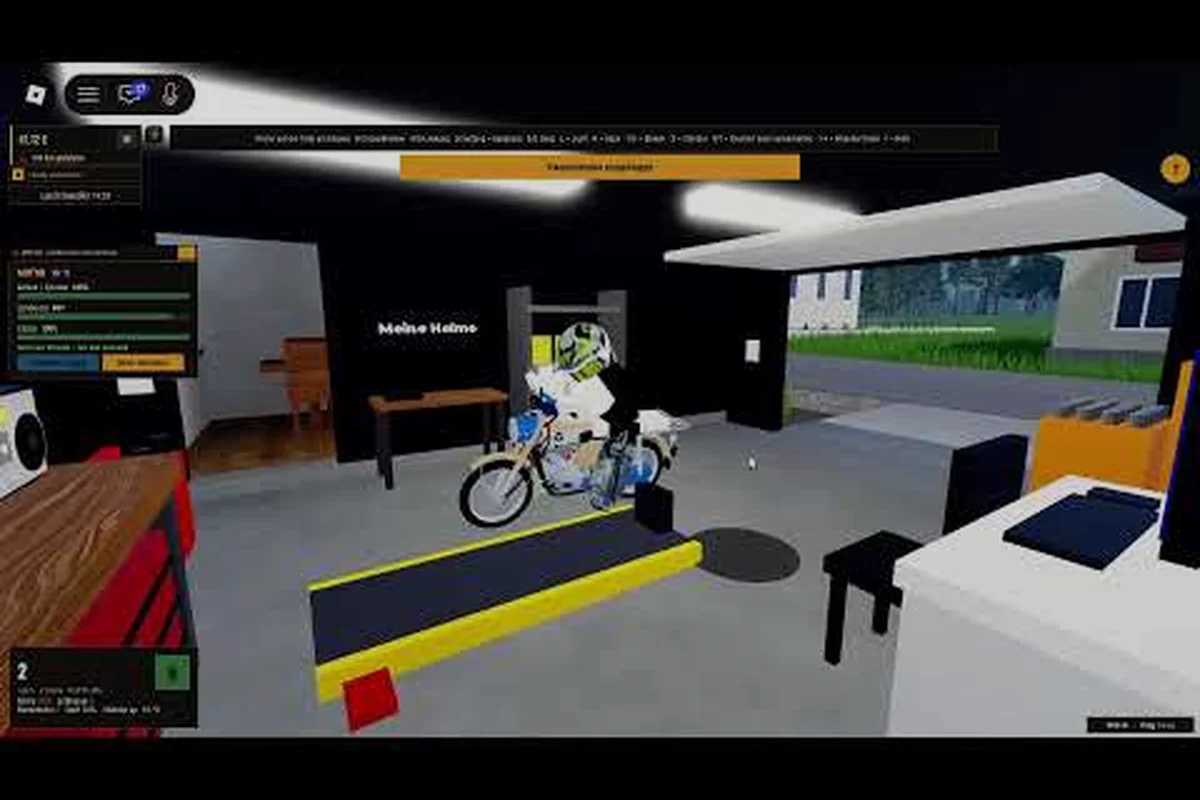
Picking your first bike in German Moped Days is the single decision that shapes your entire early game, and the German Moped Days best starter moped for new riders is not always the flashiest option on the lot. Get it right and you cruise the open map with confidence; get it wrong and you spend your first hours fighting a machine that punishes every mistake.
What Makes a Good Starter Moped in German Moped Days
A starter bike has to do three jobs well: it must be forgiving to control, cheap enough to maintain on a beginner's budget, and simple enough that you understand its quirks before you start chasing top speed. The German Moped Days mopeds roster leans heavily on classic German machines, and that heritage matters because each bike carries a distinct personality rather than a generic stat block.
| Starter Criterion | Simson S51 (50cc stock) | MTX 110 (110-class two-stroke) | MTX 130 (larger variant) |
|---|---|---|---|
| Displacement class | 50cc stock cylinder | 110-class two-stroke | Larger 130 variant |
| Power delivery | Spools up gradually, rear wheel stays planted | Moderate two-stroke hit | More power and torque than MTX 110 |
| Tuning headroom | Strong tuning potential, iconic vintage base | Two-stroke classic with tuning room | Extra tuning options beyond MTX 110 |
| Maintenance load for a beginner | Lowest — stock cylinder, fewer tuning parts to babysit | Moderate — more displacement to manage | Highest — most parts and tuning variables |
| Best suited to | First purchase / learning map traffic | Riders past the basics | Experienced riders chasing torque |
| Cultural role | Heart of European moped culture, strong Simson presence | Community-discussed alternative | Community-discussed top-end option |
The first thing every new rider learns is the starting ritual. You kick-start the engine, mix a two-stroke fuel blend, and then ease into your first cruise across the map — a sequence demonstrated in the German Moped Days overview video by Roblox Radar. Bikes that tolerate sloppy fuel mixes and gentle throttle inputs are far friendlier to newcomers than high-strung models that demand precision from the first minute.
Three qualities separate a good first bike from a frustrating one: forgiving power delivery, low maintenance overhead, and predictable handling. In German Moped Days terms, that means favoring a Simson S51 over a tuned 70cc build, since the stock 50cc cylinder spools up gradually and lets you learn the map's traffic patterns without the rear wheel stepping out mid-corner. A forgiving starter also keeps your tuning budget intact — you spend your first Deutschmarks on fuel mix and basic repairs rather than replacing blown gaskets or chasing carburetor jetting, which is exactly where most beginners lose momentum.
-
Forgiving power delivery — the engine builds speed gradually instead of snapping the rear wheel loose.
-
Low maintenance overhead — fewer tuning parts to babysit while you are still learning the map.
-
Predictable handling — stable at cruising speed so you can focus on traffic and corners, not constant corrections.
Engine displacement, or moped cc, is the number most players fixate on first, and it is genuinely useful as a rough guide. A smaller cc bike accelerates more gently and is easier to control, while larger displacements reward experienced riders with more torque and tuning headroom. For a first purchase, erring on the smaller side usually pays off.
Comparing the Top Starter Options: Simson S51 vs MTX 110 vs MTX 130
The community conversation in German Moped Days simson circles almost always starts with the S51, and for good reason. The Simson S51 is an iconic vintage moped with strong tuning potential, and players consistently praise its classic look as the heart of European moped culture. It is the bike that teaches you the fundamentals without hiding them behind raw power.
The MTX line sits on the other end of the spectrum. The MTX 110 is a two-stroke classic pitched at 110-class performance, making it a natural step up once you are comfortable with basic riding. The larger MTX 130 variant adds power, torque, and extra tuning options, which sounds appealing until you realize that extra performance also means extra responsibility — a twitchy throttle and more frequent maintenance.
Here is how the three most-discussed starter candidates stack up: the Simson S51 anchors the 50cc classic class with the shallowest learning curve, the MTX 110 steps you into 110-class two-stroke performance once basic riding clicks, and the MTX 130 pushes into 130-class torque with the steepest throttle-control and maintenance demands of the trio — so your pick should track your current skill level, not raw top speed.
| Moped | Displacement Class | Difficulty for New Riders | Best For |
|---|---|---|---|
| Simson S51 | 50cc classic | Low | Learning fundamentals, vintage style |
| MTX 110 | 110-class | Medium | Riders ready for a power bump |
| MTX 130 | 130-class | Medium-High | Players chasing torque and tuning depth |
The pattern is clear: displacement and difficulty rise together. A 50cc classic like the S51 keeps the learning curve shallow, while the 110 and 130 classes ask more of your throttle control and mechanical attention. If you want the full picture of every machine on the roster, the complete moped list breaks down stats and prices side by side.
Why Displacement Matters More Than Top Speed
New riders often shop by top speed, but acceleration curve is the stat that actually determines how pleasant a bike feels in the first ten hours. A machine that reaches its ceiling slowly gives you time to read traffic, plan corners, and recover from mistakes. A high-displacement bike that surges forward the instant you touch the throttle turns every intersection into a test of reflexes.
Community reports suggest that players who start on smaller displacement bikes progress faster overall, because they spend their early sessions learning the map and the fuel system instead of wrestling with an unforgiving engine. That is the quiet advantage of the Simson S51: it never overwhelms you, so every ride teaches something.
Handling and Weight Trade-offs
Weight and handling are the second half of the starter equation. Lighter frames change direction quickly and are easier to recover when you misjudge a turn, while heavier bikes feel planted at speed but demand more planning to stop and reposition. For a beginner, the lighter end of the range is almost always the smarter pick, since you can practice cornering without fighting inertia.
How to Choose Your First Moped: A Step-by-Step Approach
Choosing well is a process, not a guess. Work through these steps in order and you will end up on a bike that matches your actual skill level rather than your ambitions. The order matters because each step filters the next: a realistic budget rules out certain displacements before you ever fall in love with a listing, and confirming the starting ritual early saves you from buying a Simson S51 or Kreidler Florett that fights you on every cold morning. Treat the sequence as a checklist rather than a menu, and by the final step you will have narrowed a crowded German moped market down to one machine that fits your garage, your hands, and your experience level.
-
Set a realistic budget. Factor in the purchase price plus ongoing fuel and tuning costs, not just the sticker number.
-
Match displacement to experience. Brand-new riders should stay in the lower cc range until kick-starting and fuel mixing feel automatic.
-
Test the starting ritual. Kick-start the engine and mix a two-stroke blend on a candidate bike before committing — some machines are noticeably fussier than others.
-
Ride a short loop. Take one cruise around a low-traffic area to feel the throttle response and handling firsthand.
-
Check tuning potential. If you plan to customize later, confirm the bike has upgrade paths before you buy.
-
Confirm garage space. Make sure you have a slot available so your new purchase is not stuck in limbo.
That last point trips up more players than you would expect. Garage slots and parking are limited, so planning where your bike lives is part of the purchase decision. The Simson S51 collector's guide covers garage management and classic-bike ownership in more detail if you are leaning toward the vintage route.
Reading the Price-to-Performance Ratio
Price and performance do not scale linearly in German Moped Days. The jump from a 50cc classic to a 110-class machine often costs a meaningful chunk of your early savings for a modest speed gain, while the leap to 130-class territory costs even more. For a first bike, the value sweet spot usually sits at the lower end: you get a reliable machine, keep money in reserve for fuel and repairs, and avoid overpaying for performance you cannot yet use.
When to Upgrade
Upgrade when your current bike stops teaching you anything — when kick-starting is muscle memory, fuel mixing is routine, and you consistently ride near the machine's limits without losing control. That is the signal that you have outgrown your starter and are ready for more displacement and tuning depth.
Budgeting, Fuel, and Maintenance for New Riders
Money management separates riders who progress smoothly from those who stall out. Every bike in German Moped Days mopeds runs on a two-stroke fuel blend, which means fuel is a recurring cost you must budget for from day one. Running a lean or inconsistent mix damages performance, so learning the correct ratio early saves you expensive repairs later.
| Cost Category | Beginner Priority | Notes |
|---|---|---|
| Purchase price | High | Lower cc keeps this manageable |
| Fuel (two-stroke mix) | High | Recurring cost, budget weekly |
| Basic maintenance | Medium | More frequent on higher cc bikes |
| Tuning parts | Low | Defer until you upgrade |
| Cosmetic customization | Optional | Paint and lights for style only |
Cosmetic customization is available on every bike through paint, lights, and later tuning parts, but these are style choices rather than performance necessities. A new rider should treat cosmetics as a reward for hitting a savings goal, not an early expense. If you want to accelerate your income, the gamepass breakdown explains which passes actually pay for themselves.
Fuel Mixing Basics
Two-stroke engines need oil blended into the fuel, and getting the ratio wrong is the most common beginner mistake. A mix that is too lean runs hot and wears the engine; too rich and you lose power and foul the spark plug. Practice the mixing step until it is second nature, because you will repeat it constantly.
Maintenance Rhythm
Maintenance on a low-displacement bike is light: check the fuel mix, watch for wear on tuning parts, and address problems before they cascade. Higher-displacement machines like the MTX 130 demand more attention, which is another reason to start small and build your mechanical habits gradually.
Common Beginner Mistakes to Avoid
Most early frustrations at German Moped Days trace back to a handful of avoidable errors, and nearly all of them stem from treating your first Simson like a finished project instead of a learning platform. The riders who enjoy smooth opening sessions tend to follow the same pattern: they pick a stock S51 or KR51/1 in the 50cc class, learn the 1:50 two-stroke fuel mix before touching the carburetor, and resist the urge to chase cosmetic upgrades or a bigger displacement until they can actually feel what the clutch and gearbox are telling them. Steering clear of these errors keeps your first sessions enjoyable and your wallet intact, because a blown top end from a lean mix or a seized engine from wrong jetting costs far more than the patience required to read the manual first.
-
Buying by top speed alone. Displacement and acceleration curve matter more than a headline number for a new rider.
-
Skipping the fuel-mixing tutorial. A bad blend causes performance problems that feel like mechanical faults.
-
Overspending on cosmetics. Paint and lights do not make you faster; save them for later.
-
Ignoring garage limits. Buying a bike with nowhere to park it wastes money and momentum.
-
Upgrading too early. Moving to a 130-class machine before mastering the basics makes every ride harder, not more fun.
The through-line is patience. Every mistake on this list comes from rushing a decision that a little research would have solved. If you want a broader orientation before you commit, the beginner's starter guide walks through the opening hours step by step.
Recovering From a Bad First Purchase
If you already bought a bike that feels wrong, you are not stuck. Ride it conservatively while you save toward a better fit, and treat the experience as free lessons in throttle control. Many players find that a few hours on an unforgiving machine makes them appreciate a well-matched starter even more when they finally switch.
Final Thoughts on Picking Your Starter Moped
The German Moped Days best starter moped for new riders comes down to matching displacement to experience and keeping your budget realistic. The Simson S51 remains the safest first pick thanks to its forgiving 50cc classic character and iconic vintage appeal, while the MTX 110 and MTX 130 make sense once your fundamentals are solid. Start small, master the kick-start and fuel-mixing ritual, budget for the two-stroke blend, and upgrade only when your current bike stops teaching you anything new.
Frequently Asked Questions
What is the best starter moped in German Moped Days?
The Simson S51 is widely considered the best starter because its 50cc classic engine delivers forgiving power and predictable handling. Community reports consistently praise it for teaching fundamentals without overwhelming new riders, and its vintage styling keeps it desirable long after you have outgrown its performance ceiling.
How much does moped cc affect difficulty for beginners?
Displacement rises with difficulty. A 50cc classic like the S51 accelerates gently and tolerates mistakes, while 110-class and 130-class machines build speed faster and demand sharper throttle control. New riders should stay in the lower cc range until kick-starting and fuel mixing become automatic habits.
Do I need to mix fuel on every German Moped Days moped?
Yes. Every bike in German Moped Days mopeds runs on a two-stroke fuel blend, so mixing oil into fuel is a recurring task rather than a one-time setup. Getting the ratio right protects engine performance, while a lean or inconsistent mix causes power loss and premature wear.
Is the MTX 130 a good first bike?
The MTX 130 is better as a second or third purchase. Its extra power, torque, and tuning options are genuinely rewarding, but they also punish sloppy throttle control and require more maintenance attention. New riders get more value from a smaller displacement machine before stepping up to 130-class performance.
How do I know when to upgrade my starter moped?
Upgrade when your current bike stops challenging you: kick-starting is muscle memory, fuel mixing is routine, and you ride near its limits without losing control. At that point, moving to a higher displacement machine adds genuine value instead of unnecessary difficulty, and your saved budget covers the upgrade.